
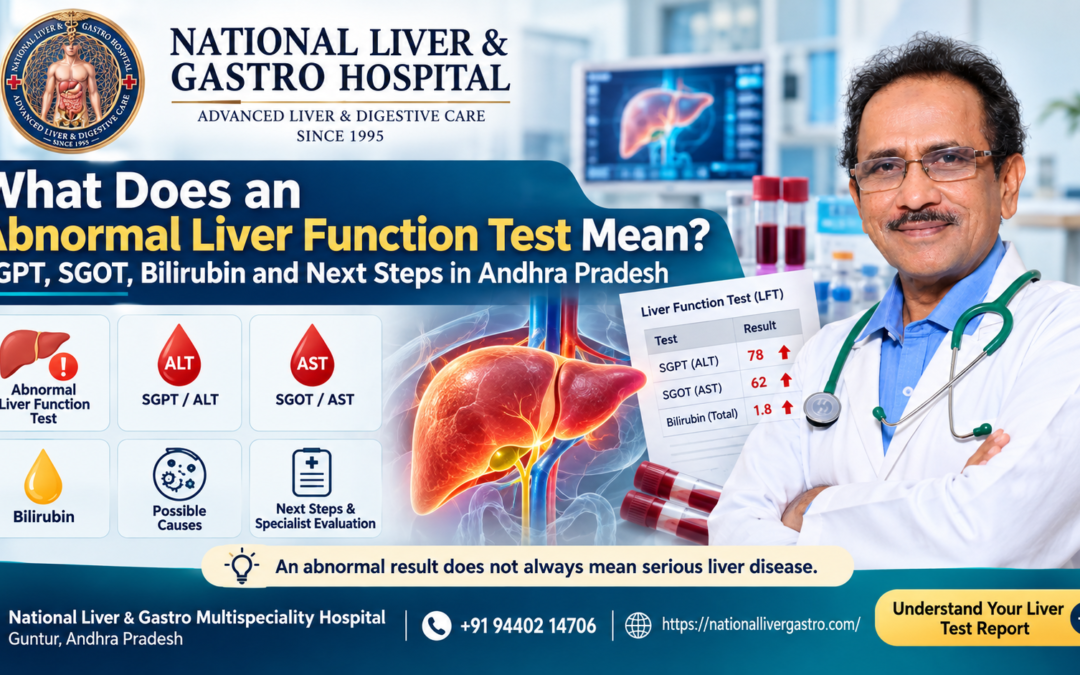
What Does an Abnormal Liver Function Test Mean? SGPT, SGOT, Bilirubin and Next Steps in Andhra Pradesh
Seeing an abnormal liver function test on a blood report can be worrying, especially when numbers such as SGPT, SGOT, ALT, AST or bilirubin are outside the laboratory reference range. However, an abnormal result does not automatically mean that you have serious liver disease.
Liver blood tests are usually interpreted together rather than one number being considered on its own. The result may be influenced by liver conditions, medicines, alcohol use, infections, metabolic health, bile duct problems and, in the case of AST, conditions outside the liver as well.
This guide explains what common liver test results mean, why they may become abnormal, what your doctor may recommend next and when specialist evaluation is important. If you are looking for a Gastro Hospital in Andhra Pradesh, understanding your report can help you have a more informed discussion with a qualified specialist.
Quick answer: An abnormal liver function test means one or more substances or enzymes measured in the blood are outside the laboratory’s expected range. Common tests include ALT (SGPT), AST (SGOT), alkaline phosphatase, bilirubin, albumin and sometimes GGT or clotting tests. The meaning depends on which result is abnormal, how high or low it is, whether the pattern persists and what symptoms or medical conditions are present.
Have an Abnormal Liver Blood Test?
Bring your latest blood report to a qualified gastroenterology specialist for proper interpretation and advice about appropriate next steps.
Call +91 94402 14706 WhatsApp Us Book an Appointment View Hospital LocationWhat Is a Liver Function Test?
A liver function test, often called an LFT or liver panel, is a group of blood tests used to assess substances associated with the liver and biliary system. Some tests indicate liver-cell injury, while others provide information about bile flow or the liver’s ability to make proteins and clotting factors.
The term “liver function test” is widely used, but not every test in the panel directly measures liver function. ALT and AST, for example, are mainly markers of cellular injury. Albumin and prothrombin time provide different information about liver synthetic function.
Because these tests provide different types of information, doctors normally interpret the complete pattern alongside symptoms, medical history and other investigations.
What Do SGPT, SGOT, ALT and AST Mean?
SGPT and SGOT are older names that many people still see on laboratory reports. Modern reports often use the terms ALT and AST.
| Test | Common Name | What It Generally Indicates |
|---|---|---|
| ALT | SGPT | ALT is found mainly in the liver. An elevated level can indicate liver-cell injury, although the result does not identify the cause by itself. |
| AST | SGOT | AST can rise with liver injury but is also present in muscles and other tissues. It therefore needs to be interpreted with other results. |
| ALP | Alkaline phosphatase | ALP can increase with problems involving bile flow, but it can also come from tissues such as bone. Additional testing may help identify the source. |
| Bilirubin | Total / Direct / Indirect | Bilirubin is produced during normal breakdown of red blood cells and is processed and removed by the liver. Elevated levels may occur with liver disease, bile duct obstruction or increased red blood cell breakdown. |
| Albumin | Liver-made protein | Albumin provides information about protein production and can be affected by conditions other than liver disease. |
| GGT | Gamma-glutamyl transferase | GGT can help doctors interpret certain alkaline phosphatase elevations and assess hepatobiliary patterns. |
What Does a High SGPT or ALT Level Mean?
SGPT is another name for alanine aminotransferase, or ALT. Because ALT is concentrated mainly in the liver, an increase can be a sign of liver-cell injury.
Possible causes include fatty liver disease, viral hepatitis, medication-related liver injury, alcohol-related liver disease and other liver conditions. ALT can also be affected by factors such as intense exercise, certain medicines and supplements.
The amount of ALT elevation is also important. A small increase and a very large increase may lead a doctor toward different parts of the diagnostic process. Reference ranges also vary between laboratories, so a result should be compared with the range printed on your individual report.
An elevated ALT does not by itself tell you whether the liver is permanently damaged or what disease is responsible. Further assessment is often needed.
What Does a High SGOT or AST Level Mean?
SGOT is the older name for aspartate aminotransferase, or AST. AST can increase when liver cells are injured, but AST is also present in skeletal muscle, heart muscle and other tissues.
This means a high AST does not always point exclusively to a liver problem. Doctors may compare AST with ALT, other liver tests and your symptoms to understand the pattern.
Recent intense exercise, muscle injury and certain medical conditions can affect AST. For this reason, it is important not to interpret a raised SGOT result without considering the complete clinical picture.
What Does High Bilirubin Mean?
Bilirubin is a yellow substance produced when the body breaks down old red blood cells. The liver processes bilirubin and helps remove it through bile.
When bilirubin is elevated, doctors may determine whether the increase is mainly direct, also called conjugated, or indirect, also called unconjugated. This distinction can help narrow down possible causes.
High bilirubin may occur with liver disease, bile duct obstruction or conditions that increase the breakdown of red blood cells. When bilirubin rises significantly, some people may develop yellowing of the skin or whites of the eyes, known as jaundice.
Important: Do not diagnose the cause of jaundice from bilirubin alone. Bilirubin results need to be interpreted with other blood tests, symptoms and, when appropriate, imaging.
Why Can Liver Function Tests Become Abnormal?
There are many possible reasons for abnormal liver blood tests. In some people, the change is temporary. In others, an abnormal pattern may be an early clue to a liver or biliary condition that needs further evaluation.
Fatty Liver and Metabolic Health
Metabolic dysfunction-associated steatotic liver disease and related fatty liver conditions can be associated with elevated ALT or AST. Diabetes, excess body weight and other metabolic risk factors may increase the likelihood of fatty liver disease.
Viral Hepatitis
Hepatitis viruses can cause inflammation and liver-cell injury. Depending on the clinical situation, a doctor may recommend blood tests for hepatitis A, B or C and other investigations.
Medicines and Supplements
Prescription medicines, over-the-counter medicines and some herbal or dietary supplements can affect liver blood tests. A complete medication and supplement history is therefore important.
Alcohol-Related Liver Injury
Alcohol can affect liver health and may contribute to abnormal liver enzymes. The relevance of alcohol depends on the amount, pattern of use and the individual’s overall health.
Bile Duct or Gallbladder Problems
Conditions that interfere with bile flow can affect alkaline phosphatase and bilirubin and may sometimes be accompanied by abdominal discomfort or jaundice.
Other Causes
Autoimmune liver conditions, inherited disorders, muscle injury, infections and other medical problems can also produce abnormal results. This is why a single blood value should not be treated as a final diagnosis.
How Doctors Interpret an Abnormal Liver Test Pattern
The pattern of abnormalities can be more informative than one isolated number. Doctors commonly consider whether the main changes involve ALT and AST, alkaline phosphatase, bilirubin or several tests together.
| Pattern | Tests Often More Noticeably Abnormal | What It May Prompt Doctors to Investigate |
|---|---|---|
| Hepatocellular pattern | ALT and/or AST | Possible liver-cell injury from conditions such as viral hepatitis, fatty liver, alcohol-related injury or medication effects. |
| Cholestatic pattern | ALP, often with bilirubin | Possible problems affecting bile flow or the biliary system. |
| Mixed pattern | ALT/AST and ALP | A combination of hepatocellular and cholestatic abnormalities requiring broader evaluation. |
| Predominantly elevated bilirubin | Bilirubin | Further distinction between direct and indirect bilirubin and investigation of liver, bile duct and non-liver causes. |
What Are the Next Steps After an Abnormal LFT?
The next step is not always another complicated scan. In many cases, doctors begin by confirming the abnormality, reviewing your history and looking at the complete laboratory pattern.
A Typical Evaluation May Include:
- Reviewing the exact laboratory results and reference ranges.
- Checking previous blood reports to see whether the abnormality is new or persistent.
- Reviewing prescription medicines, pain medicines, supplements and herbal products.
- Discussing alcohol use, diet, weight, diabetes and other metabolic risk factors.
- Reviewing symptoms such as jaundice, abdominal pain, nausea, itching or dark urine.
- Considering hepatitis and other blood tests when appropriate.
- Using ultrasound or other imaging when the history and laboratory pattern indicate it.
- Assessing for liver fibrosis or other complications when clinically indicated.
- Arranging specialist follow-up if the abnormalities are significant, persistent or unexplained.
When Should You See a Liver Specialist?
A one-time mild abnormal result may sometimes need repeat testing or simple follow-up. However, specialist assessment becomes more important when the abnormality is persistent, marked, associated with symptoms or difficult to explain.
Patients seeking a Liver Specialist in Andhra Pradesh may benefit from having their complete laboratory report, previous imaging reports and medication list ready for the consultation.
Consider specialist evaluation when you have recurring abnormal liver tests, unexplained jaundice, persistent enzyme elevation, known hepatitis, suspected fatty liver with risk factors, abnormal bilirubin or possible bile duct disease.
Why Is a Gastroenterology Hospital Helpful for Abnormal Liver Tests?
Abnormal liver tests can sometimes require more than a single blood test. Depending on the suspected cause, evaluation may involve blood work, ultrasound, advanced imaging, endoscopy or specialist follow-up.
A dedicated Gastroenterology Hospital in Guntur can be useful when patients need coordinated evaluation for liver, digestive and biliary conditions.
When searching online for a Best Liver Specialist in Guntur or a Best Gastro Hospital in Guntur , focus on relevant specialist expertise, diagnostic facilities, treatment pathways and follow-up care rather than relying only on a search ranking.
What Symptoms Can Occur Alongside Abnormal Liver Tests?
Some people with abnormal liver blood tests have no symptoms. Others may notice symptoms related to the underlying condition.
- Unusual tiredness or weakness
- Loss of appetite
- Nausea or vomiting
- Upper or right-sided abdominal discomfort
- Yellowing of the skin or eyes
- Dark-coloured urine
- Pale stools
- Generalised itching
- Abdominal swelling or leg swelling
Symptoms alone cannot establish the cause. Some digestive and non-liver conditions can produce similar complaints, so medical evaluation is important when symptoms persist or become significant.
When Should Abnormal Liver Results Be Evaluated Urgently?
Seek prompt medical attention when abnormal liver tests occur with significant jaundice, severe or persistent abdominal pain, repeated vomiting, confusion, unusual bleeding, marked weakness or rapidly worsening symptoms.
Call +91 94402 14706 Find National Liver & Gastro HospitalWhat Should You Bring to a Liver Specialist Appointment?
A little preparation can make your consultation more useful. Instead of bringing only the latest abnormal result, take your complete health information with you.
Keep These Details Ready:
- Your latest liver function test report.
- Older reports, if available.
- Ultrasound, CT, MRI or other scan reports.
- A list of prescription and over-the-counter medicines.
- Details of vitamins, herbal products or dietary supplements.
- Information about known diabetes, high cholesterol or other health conditions.
- A note of symptoms, when they started and whether they are getting worse.
Can an Abnormal Liver Test Return to Normal?
Sometimes, yes. The outcome depends entirely on the underlying reason for the abnormal result. Some temporary causes may resolve after the triggering problem improves, while chronic liver conditions may require ongoing monitoring and treatment.
The important point is not to assume that a repeat normal result always rules out liver disease or that one abnormal test automatically confirms it. Doctors consider trends over time along with symptoms, risk factors, examination findings and other investigations.
Abnormal Liver Test Evaluation at National Liver & Gastro Multispeciality Hospital
National Liver & Gastro Multispeciality Hospital in Guntur provides specialist evaluation for liver and gastrointestinal concerns.
Patients with abnormal SGPT, SGOT, bilirubin or other liver blood test results can discuss their reports with a qualified specialist and understand which additional investigations may be appropriate for their situation.
Depending on the clinical findings, the evaluation may include a review of blood tests, medical history, medications, metabolic risk factors, imaging and other diagnostic investigations.
If you are searching for a Gastro Specialist in near me in the Guntur area, convenient access should be considered alongside specialist expertise, diagnostic support and the ability to provide appropriate follow-up.
Need Help Understanding an Abnormal Liver Report?
Do not rely on one test value alone. Get your complete report reviewed and discuss the appropriate next steps with a qualified gastroenterology or liver specialist.
Call +91 94402 14706 WhatsApp Us Book an Appointment View Google MapsFrequently Asked Questions About Abnormal Liver Function Tests
1. What does an abnormal liver function test mean?
It means one or more measurements in the liver panel are outside the laboratory’s reference range. The result does not automatically diagnose liver disease. Doctors interpret the full pattern together with symptoms, medical history and other tests.
2. Is high SGPT the same as high ALT?
Yes. SGPT is an older term for ALT, or alanine aminotransferase. ALT is mainly found in the liver, and a higher-than-expected result may indicate liver-cell injury, although other factors can also affect the level.
3. Is SGOT the same as AST?
Yes. SGOT is the older name for AST, or aspartate aminotransferase. AST can rise with liver injury, but it is also present in muscles and other tissues, so the result must be interpreted in context.
4. Does high bilirubin always mean liver disease?
No. High bilirubin can occur because of liver disease, impaired bile flow or increased breakdown of red blood cells. Doctors may separate direct and indirect bilirubin to help determine the likely cause.
5. Can fatty liver cause abnormal SGPT and SGOT?
Yes. Fatty liver conditions can be associated with raised ALT and AST. However, abnormal enzymes can have many causes, so further assessment may be required before identifying the reason for the result.
6. Can medicines cause abnormal liver tests?
Yes. Some prescription medicines, over-the-counter medicines and supplements can affect liver blood tests. Do not stop a prescribed medicine without discussing it with the healthcare professional who manages your treatment.
7. What tests may be needed after an abnormal LFT?
Depending on the pattern and clinical history, a doctor may recommend repeat blood testing, hepatitis testing, additional liver chemistry tests, ultrasound or other imaging, and sometimes fibrosis assessment or specialist investigations.
8. Should I worry if my liver enzymes are slightly high?
A slight elevation does not by itself tell you how serious the problem is. The laboratory reference range, pattern of results, trend over time, symptoms and other health factors all matter.
9. When should I see a liver specialist?
Specialist evaluation may be appropriate when liver tests remain abnormal, the cause is unclear, bilirubin is elevated, symptoms are present, hepatitis or fatty liver is suspected, or there are signs of a more significant liver or bile duct problem.
10. How can I find a liver or gastro specialist near me?
Look for a qualified gastroenterology or liver specialist who can interpret abnormal liver tests and arrange appropriate diagnostic evaluation. Consider specialist experience, diagnostic facilities, treatment options, location and follow-up care.
What Should You Do After an Abnormal Liver Function Test?
An abnormal liver report is a reason to investigate, not a reason to panic. SGPT or ALT may indicate liver-cell injury, SGOT or AST can rise from liver or non-liver causes, and bilirubin can increase for several different reasons.
The most useful next step is to understand the complete pattern rather than focusing on one number. Your doctor may compare current and previous results, review medicines and risk factors, assess symptoms and decide whether further blood tests or imaging are necessary.
For patients looking for specialist care in the region, a dedicated Gastroenterology Hospital in Guntur can provide a setting for coordinated evaluation of liver and digestive concerns.
If you have an abnormal report and want professional guidance, contact National Liver & Gastro Multispeciality Hospital to discuss consultation and available diagnostic services.
Medical Information Sources
This article is for general educational information only. The meaning of an abnormal liver test depends on the individual patient and should be assessed by a qualified healthcare professional.
American College of Gastroenterology – Evaluation of Abnormal Liver Chemistries
National Liver & Gastro Multispeciality Hospital
Medical Disclaimer: This article provides general educational information and is not a diagnosis or substitute for professional medical advice. Laboratory reference ranges differ between laboratories, and an abnormal result should be interpreted according to the patient’s symptoms, medical history and complete test report. Do not stop prescribed medicines without medical advice. Seek prompt medical attention for severe or rapidly worsening symptoms, significant jaundice, confusion, repeated vomiting, unusual bleeding or severe abdominal pain.