
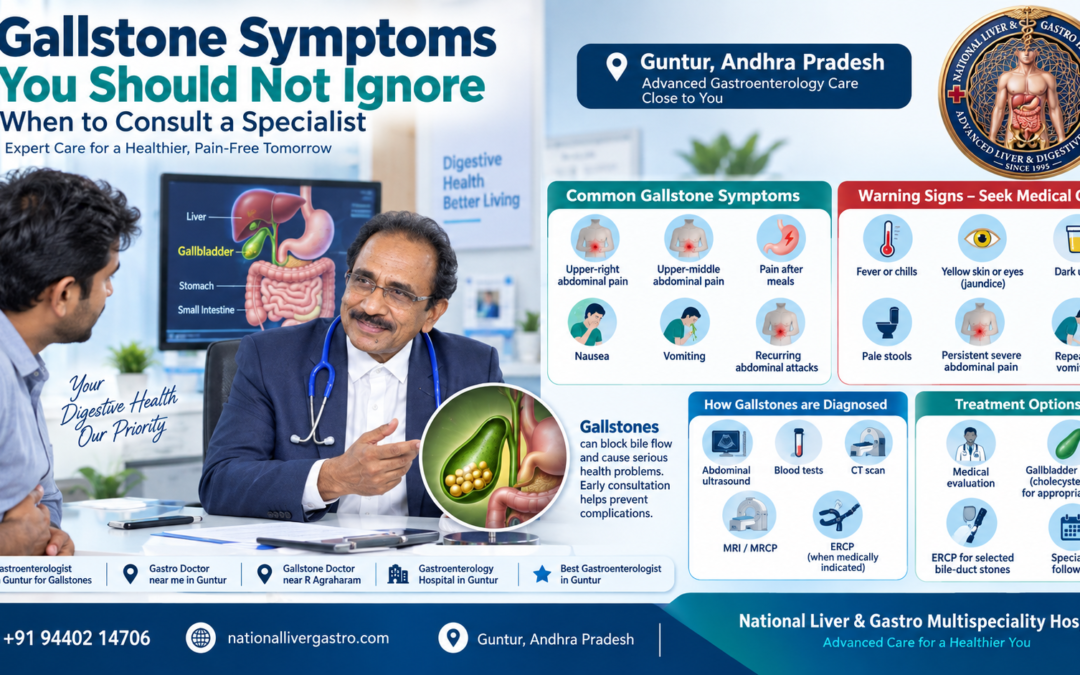
Gallstone Symptoms You Should Not Ignore: When to Consult a Specialist
Gallstone Symptoms You Should Not Ignore: When to Consult a Specialist
Gallstones can remain unnoticed for a long time. In fact, some people have gallstones without experiencing any symptoms at all. The problem begins when a stone blocks the normal flow of bile, which can trigger a painful gallbladder attack and, in some cases, lead to complications.
Sudden pain in the upper-right or central abdomen, nausea, vomiting, fever or yellowing of the skin and eyes should not simply be dismissed as gas or ordinary indigestion. These symptoms can have several possible causes, and proper assessment is important when gallstones are suspected.
If you are searching for a Gastroenterologist in Guntur for Gallstones, this guide explains the symptoms to watch for, when specialist care is appropriate, how gallstones are diagnosed, what treatment may involve and which warning signs need urgent medical attention.
Quick answer: The most typical symptom of a gallstone attack is sudden or severe pain in the upper-right or middle abdomen. The pain may last for several hours and can be accompanied by nausea or vomiting. Fever, chills, jaundice, dark urine, pale stools or persistent severe pain can indicate a complication and require prompt medical evaluation.
Experiencing Possible Gallstone Symptoms?
Do not ignore recurring abdominal pain, vomiting or other warning signs. Discuss your symptoms with a qualified specialist.
Call +91 94402 14706 WhatsApp Us Book an AppointmentWhat Are Gallstones?
Gallstones are hard deposits that develop inside the gallbladder. They are commonly made from cholesterol or pigments such as bilirubin. Some people develop a single stone, while others may have several stones.
The gallbladder is a small organ located beneath the liver. It stores bile, a digestive fluid produced by the liver. After you eat, the gallbladder releases bile into the digestive tract.
Gallstones become a medical concern when they interfere with the normal movement of bile. A stone lodged in a bile duct can produce significant pain and may contribute to inflammation, infection or other complications.
Importantly, not every gallstone causes symptoms. Gallstones that are discovered incidentally and are not causing problems may not require treatment immediately. The appropriate approach depends on the individual’s symptoms and clinical findings.
What Does a Gallstone Attack Feel Like?
A gallstone attack, sometimes called biliary colic, commonly produces pain in the upper-right portion of the abdomen. The discomfort may also be felt in the middle upper abdomen.
The pain can be intense and persistent rather than coming and going like ordinary intestinal cramps. A gallbladder attack may occur after a meal, particularly a heavy meal, and can continue for several hours.
Some people also experience nausea or vomiting during an attack.
| Possible Symptom | What It May Feel Like |
|---|---|
| Upper abdominal pain | Sudden or significant pain below the right ribs or in the upper middle abdomen. |
| Pain after eating | Symptoms may occur after meals and can sometimes become noticeable following a heavy meal. |
| Nausea | A sick or unsettled feeling that may occur with abdominal pain. |
| Vomiting | Some people may vomit during a gallbladder attack. |
| Recurring attacks | After one symptomatic attack, further episodes may occur. |
Which Gallstone Symptoms Should You Not Ignore?
Not all abdominal pain means gallstones. However, certain symptoms deserve medical assessment, particularly when they occur together or keep returning.
1. Strong or Persistent Upper Abdominal Pain
Pain that is severe, persistent or lasts for several hours should not be routinely attributed to acidity or gas. Gallstones are one possible cause, but conditions involving the pancreas, liver, stomach and intestines can cause similar pain.
2. Nausea and Vomiting
Nausea and vomiting can accompany gallbladder attacks. Repeated vomiting is more concerning when it occurs with severe abdominal pain, fever, dehydration or other warning signs.
3. Fever or Chills
Fever or chills alongside abdominal pain can suggest inflammation or infection involving the gallbladder or bile ducts. This situation should be assessed promptly.
4. Yellow Skin or Eyes
Yellowing of the skin or whites of the eyes is known as jaundice. When it occurs with suspected gallstones, it can suggest that a stone is affecting bile flow and requires medical evaluation.
5. Dark Urine or Pale Stools
Changes in urine or stool colour can occur when bile is not flowing normally. These signs should be discussed with a doctor, especially when accompanied by abdominal pain or jaundice.
Important: Severe abdominal pain, persistent vomiting, fever or chills, jaundice, dark urine or other signs of a possible bile duct blockage require prompt medical assessment rather than waiting for symptoms to disappear.
Can Gallstones Cause Complications?
Yes. A gallstone can cause problems when it blocks the gallbladder outlet, common bile duct or another part of the biliary system.
Possible complications include inflammation of the gallbladder, blockage or infection of the bile ducts and inflammation of the pancreas caused by a stone blocking the pancreatic drainage pathway.
This is why recurring attacks should not be ignored simply because the pain eventually settles. A temporary improvement does not necessarily mean that the underlying problem has disappeared.
When Is It Time to See a Gastroenterologist for Gallstones?
A specialist consultation is appropriate when you have symptoms that may be related to gallstones, particularly if episodes are recurring or becoming more severe.
- Repeated attacks of upper abdominal pain
- Abdominal pain following meals
- Nausea or vomiting associated with abdominal pain
- Known gallstones found during an ultrasound or other scan
- Fever or chills with suspected gallbladder symptoms
- Yellowing of the skin or eyes
- Dark urine or unusually pale stools
- Abnormal liver blood tests
- Suspected bile duct stones
- Previous gallstone-related complications
A gastroenterologist can review your symptoms, previous reports and medical history and determine whether additional testing or treatment is appropriate.
How Are Gallstones Diagnosed?
Gallstone diagnosis usually starts with your symptoms and medical history. Your doctor may ask about the location and duration of abdominal pain, meal-related symptoms, vomiting, fever, jaundice and previous episodes.
A physical examination and appropriate laboratory or imaging tests may then be used to investigate the gallbladder and surrounding structures.
Ultrasound
Abdominal ultrasound is commonly used to look for gallstones. It is non-invasive and can provide information about the gallbladder and surrounding structures.
Blood Tests
Blood tests may help identify signs of inflammation or infection and may provide information about the liver, gallbladder and pancreas.
CT Scan
CT imaging may be considered when the doctor needs more information about the abdomen or wants to evaluate possible complications. A CT scan can detect some gallstones but may not identify every stone.
MRI and MRCP
MRI-based imaging can provide detailed views of the biliary system. In selected patients, an MRCP examination may help evaluate the bile ducts and look for stones or obstruction.
ERCP
Endoscopic retrograde cholangiopancreatography, or ERCP, combines endoscopic and X-ray techniques. It is used selectively, particularly when a stone is suspected or confirmed in the common bile duct and needs to be removed.
| Test | Purpose |
|---|---|
| Ultrasound | Common first imaging test for detecting gallstones and evaluating the gallbladder. |
| Blood tests | Can identify signs of inflammation, infection or abnormalities involving the liver or pancreas. |
| CT scan | May help assess the abdomen and detect complications or some stones. |
| MRI / MRCP | Provides detailed imaging of the biliary tract and can help identify duct stones. |
| ERCP | Can be used selectively to treat certain bile duct stones. |
What Happens After Gallstones Are Found?
Finding gallstones does not automatically mean that surgery is required. The next step depends on whether the stones are causing symptoms or complications.
People who have gallstones without symptoms may not need immediate treatment. On the other hand, recurrent gallbladder attacks or complications can require active treatment.
Key point: Treatment decisions should be based on symptoms, the location of the stones, possible complications and the doctor’s assessment—not simply on the presence of gallstones on a scan.
How Are Symptomatic Gallstones Treated?
When gallstones are causing symptoms or complications, treatment is usually recommended rather than relying only on temporary symptom relief.
Gallbladder Removal Surgery
The main definitive treatment for symptomatic gallstones is removal of the gallbladder, known as cholecystectomy. Laparoscopic surgery is commonly used when appropriate.
The gallbladder is not essential for normal digestion. After removal, bile continues to travel from the liver into the digestive tract.
ERCP for Bile Duct Stones
If a gallstone has moved into the common bile duct, an endoscopic procedure such as ERCP may be used to remove the stone. Further treatment of the gallbladder may also be considered depending on the patient’s condition.
Medicines and Non-Surgical Approaches
Non-surgical treatments are used only in selected situations and are not suitable for every patient. A specialist should determine whether such an approach is appropriate.
Because symptomatic gallstones can return or cause complications, treatment should be discussed with a qualified specialist rather than relying on home remedies alone.
Can Diet Prevent or Control Gallstone Symptoms?
Diet can play a role in overall gallstone risk and digestive comfort, but changing your diet does not reliably dissolve established gallstones.
A balanced eating pattern, adequate fibre, healthy weight management and regular physical activity can support general health. Rapid weight loss and very restrictive diets may increase the risk of gallstone formation.
If particular foods consistently trigger symptoms, discuss your diet with your healthcare professional. Avoiding a long list of foods without guidance can make it harder to maintain adequate nutrition.
Practical Gallstone-Friendly Habits
- Maintain a healthy body weight through sustainable habits.
- Avoid extreme crash diets and very rapid weight loss.
- Choose a balanced diet with fibre-rich foods.
- Limit heavily fried and very high-fat foods if they trigger symptoms.
- Stay physically active according to your health status.
- Seek medical advice if abdominal attacks keep recurring.
How Do You Choose a Gallstone Specialist in Guntur?
Choosing a specialist should involve more than searching for the closest clinic. Consider whether the doctor routinely manages gallbladder and biliary conditions and whether appropriate diagnostic and treatment services are available.
Look at Relevant Experience
Find out whether the specialist evaluates gallstones, gallbladder inflammation, bile duct stones and related digestive conditions.
Check Diagnostic Support
Ultrasound, blood testing and other investigations may be needed depending on your symptoms. Access to appropriate diagnostic services can make the evaluation process more efficient.
Consider Treatment and Follow-Up
Ask how the hospital manages patients who need further investigation, endoscopic treatment, surgery or continued follow-up. A complete care pathway can be useful when gallstones have caused recurrent symptoms.
Consider Location
Patients searching for a Gallstone Doctor near R Agraharam may prefer a convenient location, especially if repeat consultations or investigations are required.
Why Choose a Gastroenterology Hospital in Guntur for Gallstone Care?
Gallstone-related problems can range from uncomplicated symptomatic stones to conditions involving bile duct obstruction, infection or pancreatitis. The complexity of care can therefore vary considerably.
A Gastroenterology Hospital in Guntur can be a practical option when specialist consultation, diagnostic investigations and appropriate follow-up are needed.
Before your appointment, ask which services are available and whether the hospital can coordinate the investigations or procedures your doctor may recommend.
Need Gallstone Evaluation in Guntur?
Recurring abdominal pain, vomiting or jaundice should be medically evaluated rather than repeatedly treated as simple indigestion.
Call +91 94402 14706 WhatsApp Us View Location on Google MapsWhen Should Gallstone Symptoms Be Treated as an Emergency?
Some gallstone symptoms require urgent attention because they can indicate an infection, obstruction or inflammation affecting the gallbladder, bile ducts or pancreas.
- Sudden and severe abdominal pain
- Abdominal pain that continues for several hours
- Severe pain accompanied by repeated vomiting
- Fever or chills with abdominal pain
- Yellowing of the skin or eyes
- Dark urine with suspected gallstone symptoms
- Severe weakness or signs of dehydration
- Severe abdominal pain spreading to the back with vomiting
Do not wait for a routine appointment when symptoms are severe. Urgent assessment is particularly important when abdominal pain occurs with fever, jaundice, persistent vomiting or other signs of a possible complication.
Gallstone and Digestive Care at National Liver & Gastro Multispeciality Hospital
National Liver & Gastro Multispeciality Hospital in Guntur provides specialist evaluation and management for gastrointestinal and liver-related concerns.
Patients experiencing recurring upper abdominal pain, digestive discomfort, suspected gallstones or related symptoms can discuss their condition with a qualified specialist and determine whether diagnostic investigations are appropriate.
Depending on the clinical situation, evaluation may involve blood tests, ultrasound or other imaging and, when required, endoscopic or surgical treatment through an appropriate care pathway.
To learn more about available services, visit the National Liver & Gastro Multispeciality Hospital website or contact the hospital at +91 94402 14706.
Frequently Asked Questions About Gallstones
What are the most common symptoms of gallstones?
The most common symptom of symptomatic gallstones is pain in the upper-right or upper-middle abdomen. A gallstone attack may also cause nausea or vomiting and can last for several hours.
Where does gallstone pain usually occur?
Gallstone pain commonly occurs in the upper-right area of the abdomen or the upper middle abdomen. The exact location and intensity can vary, and similar pain can be caused by other digestive conditions.
How long does gallstone pain last?
A gallbladder attack can last for several hours. Pain that is severe or persistent should be medically assessed, particularly when it occurs with vomiting, fever or jaundice.
Can gallstones cause nausea and vomiting?
Yes. Nausea and vomiting can occur during a gallbladder attack. Persistent vomiting together with significant abdominal pain requires prompt medical evaluation.
Can gallstones cause fever?
Fever can occur when gallstones lead to inflammation or infection involving the gallbladder or bile ducts. Fever or chills with suspected gallstone symptoms should be assessed promptly.
Can gallstones cause jaundice?
Yes. Jaundice can occur when a stone blocks the normal flow of bile. Yellowing of the skin or eyes with abdominal pain is an important warning sign and needs prompt medical attention.
How are gallstones diagnosed?
Doctors usually use your symptoms, medical history and physical examination along with blood tests and imaging. Ultrasound is commonly used to detect gallstones, while additional imaging or procedures may be used when a bile duct stone or complication is suspected.
Is ultrasound enough to diagnose gallstones?
Ultrasound is commonly the first imaging test for gallstones and is very useful for examining the gallbladder. Additional tests may be recommended when symptoms suggest a complication or a stone in the bile ducts.
Do all gallstones require surgery?
No. Gallstones that are not causing symptoms may not require immediate treatment. Symptomatic or complicated gallstones may require active treatment, with gallbladder removal being the usual definitive treatment for symptomatic gallstones.
What is the usual treatment for symptomatic gallstones?
The usual definitive treatment for symptomatic gallstones is removal of the gallbladder, known as cholecystectomy. The exact treatment plan depends on the patient’s symptoms, medical condition and whether stones are present in the bile ducts.
Can ERCP remove gallstones?
ERCP can be used selectively to remove a gallstone that has become lodged in the common bile duct. It is an endoscopic procedure used for specific bile duct problems rather than as a routine treatment for every gallstone.
Can gallstones cause pancreatitis?
Yes. A gallstone can block the pancreatic drainage pathway and cause gallstone pancreatitis. Severe abdominal pain, especially when accompanied by vomiting, requires urgent medical assessment.
What foods should I avoid with gallstones?
Some people notice that very fatty or heavily fried meals trigger digestive symptoms. A balanced diet with appropriate fibre and healthy weight management is generally recommended, while extreme dieting and rapid weight loss should be avoided.
How can I find a Gastro Doctor near me in Guntur?
Look for a qualified gastroenterology specialist or hospital that evaluates gallstones and related digestive conditions. Consider the doctor’s relevant experience, diagnostic support, treatment options, location and follow-up services.
Where can I find a Gallstone Doctor near R Agraharam?
Patients in and around R Agraharam can look for a qualified gastroenterology specialist in Guntur who evaluates gallbladder and bile duct conditions. Location is useful for convenience, but relevant expertise and access to appropriate diagnostic and treatment services should also be considered.
When should I see a Best Gastroenterologist in Guntur for gallstones?
Consider specialist evaluation when you have recurring upper abdominal pain, known gallstones with symptoms, repeated nausea or vomiting, abnormal liver tests, jaundice or other signs that may indicate a gallstone-related complication.
Do Not Ignore Repeated Gallstone Symptoms
Gallstones are not always a cause for concern. Many people have silent gallstones that never produce symptoms. The situation changes when a stone begins to interfere with bile flow or causes repeated painful attacks.
Upper abdominal pain, nausea and vomiting can be signs of a gallbladder attack, while fever, chills, jaundice, dark urine or persistent severe pain may point toward a more serious complication.
When these symptoms occur, timely specialist evaluation can help determine whether you need observation, additional testing, endoscopic treatment or gallbladder surgery.
If you are looking for a Gastroenterologist in Guntur for Gallstones , choose a healthcare setting where your symptoms can be properly evaluated and an appropriate treatment pathway can be discussed.
For patients searching for a Gastroenterology Hospital in Guntur , National Liver & Gastro Multispeciality Hospital can be contacted for information about consultation and available services.
Do You Have Recurring Gallstone Symptoms?
Get your abdominal pain and related symptoms evaluated instead of repeatedly assuming they are simple indigestion.
Call +91 94402 14706 WhatsApp Us View National Liver & Gastro HospitalMedical Information Sources
This article is intended for general educational purposes and does not replace an individual medical consultation. Testing and treatment should be selected according to the patient’s symptoms, examination and medical history.
NIDDK – Symptoms & Causes of Gallstones
NIDDK – Diagnosis of Gallstones
NIDDK – Treatment for Gallstones
National Liver & Gastro Multispeciality Hospital
+91 94402 14706 | nationallivergastro.com
Guntur, Andhra Pradesh. View on Google Maps
Monday to Saturday, 9 AM to 8 PM
Medical disclaimer: This content is for general information only and is not a diagnosis or substitute for professional medical advice. Severe abdominal pain, persistent vomiting, fever, jaundice or suspected gallstone complications require prompt medical evaluation.