
Persistent stomach discomfort, unexplained changes in bowel habits or recurring digestive problems can leave people wondering whether something more serious is happening inside their bodies. While many digestive symptoms have manageable causes, some require a closer examination to identify the underlying problem.
Modern gastroenterology offers several ways to examine the digestive tract. Two commonly performed procedures use a thin, flexible tube with a camera to help doctors look directly at specific areas of the digestive system. Although the equipment may appear similar, the procedures examine different organs and are recommended for different medical concerns.
For someone experiencing persistent acidity, swallowing difficulty, rectal bleeding or unexplained bowel changes, understanding these investigations can make discussions with a gastroenterologist easier.
Patients searching for a Gastroenterology Hospital in Andhra Pradesh may benefit from knowing how these examinations work, when doctors recommend them, what preparation involves and what the results can reveal.
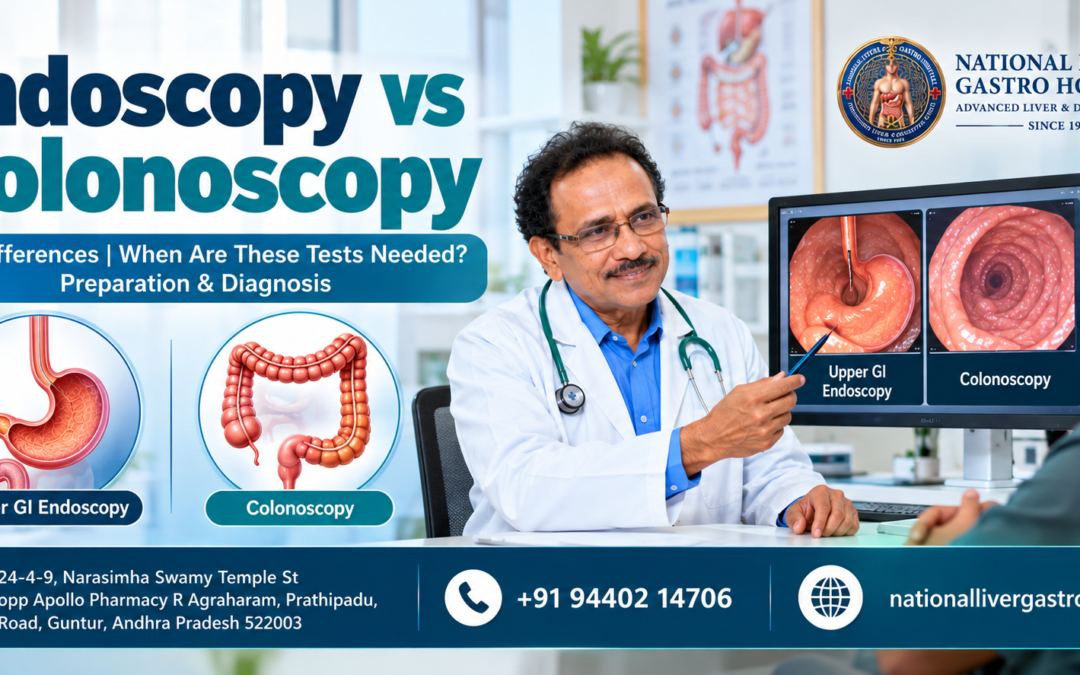
Quick Answer: Upper gastrointestinal endoscopy examines the food pipe, stomach and first part of the small intestine. Colonoscopy examines the rectum and large intestine. Doctors may recommend upper endoscopy for swallowing problems, persistent upper digestive symptoms or suspected ulcers. Colonoscopy may be advised for rectal bleeding, persistent bowel changes, suspected inflammatory bowel disease or colorectal cancer screening. The appropriate test depends on symptoms, medical history and clinical risk.
Experiencing Ongoing Digestive Problems?
Recurring stomach pain, difficulty swallowing or changes in bowel habits may require professional evaluation. Discuss your symptoms with a qualified gastroenterology specialist.
Call +91 94402 14706 WhatsApp Us Book an AppointmentUnderstanding How Doctors Examine the Digestive Tract
The digestive system includes several connected organs that perform different functions. Food travels through the oesophagus into the stomach, continues into the small intestine and eventually reaches the colon and rectum.
Because digestive problems can develop in different locations, one examination cannot answer every question about the digestive system.
Doctors first consider the symptoms, physical examination, medical history and any previous laboratory or imaging results. They then decide whether a camera-based examination is necessary.
These procedures can help doctors observe the digestive tract lining directly, collect tissue samples and, in selected cases, provide treatment during the same examination.
Appropriate Gastroenterology Tests may therefore help clarify conditions that cannot be diagnosed reliably from symptoms alone.
What Is an Upper Gastrointestinal Endoscopy?
Upper gastrointestinal endoscopy, also known as gastroscopy or oesophagogastroduodenoscopy (EGD), is a medical procedure used to examine the upper digestive tract.
A gastroenterologist passes a thin, flexible endoscope through the mouth and gently advances it into the food pipe, stomach and duodenum, which is the first part of the small intestine.
A camera attached to the instrument provides detailed images of the digestive tract lining, helping the doctor look for inflammation, ulcers, bleeding or other abnormalities.
Which Organs Are Examined?
- Oesophagus or food pipe
- Stomach
- Duodenum or first part of the small intestine
Patients considering Endoscopy in Guntur can discuss whether an upper digestive examination is appropriate for their symptoms.
When Might an Upper Digestive Examination Be Recommended?
Not every episode of acidity or indigestion requires a camera examination. Doctors consider the duration, severity and pattern of symptoms as well as the presence of warning signs.
Persistent Heartburn or Acid Reflux
Frequent acid reflux may cause burning behind the chest, sour-tasting regurgitation or irritation of the food pipe.
An upper examination may be considered when symptoms do not improve with appropriate treatment or when complications are suspected.
Difficulty or Pain While Swallowing
Food sticking while swallowing, progressive swallowing difficulty or pain when eating can suggest inflammation, narrowing or another oesophageal problem that requires medical assessment.
Suspected Stomach or Duodenal Ulcers
An endoscope allows doctors to inspect the lining of the stomach and duodenum and identify ulcers or related changes.
Unexplained Upper Digestive Bleeding
Vomiting blood or passing black, tar-like stools may indicate gastrointestinal bleeding. These symptoms require urgent medical assessment, not an ordinary appointment.
Selected Cases of Unexplained Anaemia or Weight Loss
Depending on the clinical situation, doctors may recommend further investigation when unexplained anaemia, persistent vomiting or unintended weight loss raises concern about an underlying digestive disorder.
What Is Colonoscopy and Which Organs Does It Examine?
Colonoscopy is a procedure used to examine the inner lining of the large intestine, also called the colon, and the rectum.
During the examination, a flexible colonoscope is gently introduced through the anus and advanced through the colon. The camera helps doctors examine the bowel lining for inflammation, polyps, bleeding and other abnormalities.
In selected cases, the final portion of the small intestine may also be examined.
What Can Be Identified?
- Colon polyps
- Inflammation of the bowel lining
- Possible causes of lower gastrointestinal bleeding
- Abnormal tissue changes
- Some signs of inflammatory bowel disease
- Changes requiring biopsy or further evaluation
For patients exploring Colonoscopy in Guntur , the procedure may serve both diagnostic and preventive purposes, depending on their health history and risk factors.
What Symptoms May Lead a Doctor to Recommend Colonoscopy?
Colonoscopy is often considered when symptoms suggest a possible problem involving the large intestine or rectum.
Blood in the Stool
Rectal bleeding can occur for several reasons, including haemorrhoids, inflammation, polyps or more serious colorectal conditions.
The appearance of blood alone cannot reliably establish its cause.
Persistent Changes in Bowel Habits
Ongoing diarrhoea, constipation or a significant change in usual bowel patterns may require further investigation, particularly when combined with other concerning symptoms.
Suspected Inflammatory Bowel Disease
Colonoscopy may help diagnose and assess conditions such as ulcerative colitis and Crohn’s disease.
Unexplained Iron-Deficiency Anaemia
Some patients with iron-deficiency anaemia may need colon evaluation to investigate possible gastrointestinal blood loss.
Colorectal Cancer Screening
Screening helps identify some cancers and precancerous polyps before symptoms develop. The recommended starting age and choice of test depend on individual risk and the guidelines used.
Key Differences Between the Two Procedures
Although both procedures use flexible cameras, their purposes and preparation requirements are not identical.
| Feature | Upper GI Endoscopy | Colonoscopy |
|---|---|---|
| Area examined | Oesophagus, stomach and duodenum | Rectum and large intestine |
| How the scope enters | Through the mouth | Through the anus |
| Common reasons | Swallowing difficulty, ulcers, upper GI bleeding and selected reflux symptoms | Rectal bleeding, bowel changes, suspected colitis and colorectal screening |
| Preparation | Fasting according to instructions | Dietary preparation and bowel cleansing |
| Biopsy possible? | Yes | Yes |
| Therapeutic use | Selected bleeding treatment, dilation or removal of certain lesions | Polyp removal, bleeding treatment and selected interventions |
Key Difference: The location of the suspected problem usually helps determine which examination is appropriate. Upper GI endoscopy does not inspect the entire colon, and colonoscopy does not examine the stomach or food pipe.
Can Both Examinations Be Recommended for the Same Patient?
Yes. Some patients may require evaluation of both the upper and lower digestive tract during their medical investigation.
For example, a person with unexplained iron-deficiency anaemia may need assessment for possible bleeding sources in different parts of the gastrointestinal system.
Doctors may also consider both procedures when the symptom pattern, test results or medical history suggests that a broader evaluation is necessary.
However, both procedures are not routinely required for every patient with bloating, acidity or abdominal discomfort.
The decision should be based on individual medical need.
How Should You Prepare for Upper GI Endoscopy?
Proper preparation helps the doctor perform the examination more safely and obtain clearer images.
Follow Fasting Instructions
Patients are typically asked to avoid food and drink for a specified period before the examination. Exact timing depends on the hospital’s protocol and individual medical circumstances.
Review Your Medicines
Tell the healthcare team about medicines used for diabetes, blood pressure, blood clot prevention and other conditions.
Do not stop prescribed medications without medical instructions.
Share Relevant Medical Information
Discuss allergies, previous anaesthesia problems, heart or lung conditions, pregnancy status where relevant, and other health concerns.
Arrange Transportation When Sedation Is Used
Patients receiving sedation generally need someone to accompany them home. Driving should be avoided until the medical team’s recommended period has passed.
What Preparation Is Needed Before Colonoscopy?
Colonoscopy requires the bowel to be properly cleaned so the doctor can see the intestinal lining clearly.
Inadequate preparation may prevent important findings from being seen and can sometimes require the procedure to be repeated.
Dietary Instructions
The medical team may recommend temporary changes to food intake, including a low-fibre diet or clear liquids at specified times.
Bowel-Cleansing Medicines
A prescribed bowel preparation is used to empty the colon. Many regimens involve taking part of the preparation the evening before and another portion closer to the procedure.
Hydration
Adequate fluid intake is important, but patients should follow the specific instructions provided, especially when they have kidney, heart or fluid-balance conditions.
Medication Review
Blood thinners, diabetes medicines, iron supplements and other medications may require special instructions.
Important: Never choose your own bowel-cleansing medicine or change the prescribed dose. Follow the hospital’s preparation instructions carefully and contact the healthcare team if you cannot complete the preparation.
What Happens During These Procedures?
Before the examination, the healthcare team reviews medical information, explains the procedure and obtains appropriate consent.
During upper endoscopy, the scope is advanced through the mouth to examine the upper digestive tract. A throat spray or sedation may be used according to the clinical plan.
During colonoscopy, the colonoscope is introduced through the anus and guided through the large intestine. Air or carbon dioxide may be used to help visualise the bowel lining.
Sedation practices vary depending on the procedure, patient’s medical condition and facility arrangements.
Small tissue samples may be collected when the doctor identifies an area that requires microscopic examination.
Are Endoscopy and Colonoscopy Painful?
Many people are understandably anxious about undergoing an internal examination.
Upper endoscopy may cause temporary gagging or throat discomfort, while colonoscopy may cause pressure, bloating or cramping.
Sedation, when appropriate, can improve comfort during the examination.
Most patients tolerate these procedures well, but the experience varies. Some people have underlying conditions that require additional precautions.
If you are particularly concerned about discomfort, discuss available comfort and sedation options with the doctor before your appointment.
What Are the Possible Risks?
Both procedures are commonly performed and generally have a low risk of serious complications.
However, no invasive medical procedure is completely risk-free.
Possible Complications Include:
- Bleeding, especially after certain interventions
- A reaction to sedation or anaesthesia
- Injury or perforation of the digestive tract
- Temporary bloating or discomfort
- Rare procedure-specific complications
Risk depends partly on the patient’s health and whether the examination includes biopsy, polyp removal or another therapeutic intervention.
The healthcare team should explain relevant benefits, alternatives and risks before the procedure.
What Should You Expect After the Examination?
After a camera-based digestive examination, patients may remain in a recovery area until the healthcare team considers them ready for discharge.
After Upper Endoscopy
A temporary sore throat, mild bloating or drowsiness may occur. If throat numbing medicine was used, eating and drinking should resume only as instructed.
After Colonoscopy
Mild gas, bloating or cramping may occur as air leaves the bowel. Patients who received sedation should follow driving and activity restrictions.
Understanding Your Results
Some findings can be explained immediately. However, biopsy results may take additional time because tissue samples require laboratory examination.
Ask when you should expect the results, whether any medicines need adjustment and what follow-up is recommended.
When Should Symptoms After a Procedure Be Treated as Urgent?
Some symptoms following an endoscopic procedure need immediate medical attention.
- Severe or worsening abdominal pain
- Significant or persistent rectal bleeding
- Vomiting blood
- Black, tar-like stools
- Fever with worsening symptoms
- Chest pain or breathing difficulty
- Increasing swallowing difficulty after upper endoscopy
Seek urgent medical care: Severe pain, significant bleeding, breathing problems or other serious symptoms after an examination should not be ignored or managed only with home remedies.
How Do These Tests Help Identify Digestive Disorders?
Symptoms such as abdominal pain, diarrhoea, constipation or acidity can arise from several different conditions.
Effective Digestive Disorder Diagnosis starts with understanding the patient’s symptoms and selecting appropriate investigations.
Endoscopy may help identify upper digestive inflammation, ulcers and certain structural problems.
Colonoscopy may help identify colorectal inflammation, polyps or other abnormalities.
However, many conditions cannot be diagnosed by endoscopy alone. Blood tests, stool tests, imaging and other investigations may also be required.
Does Everyone With Acidity, IBS or Constipation Need These Tests?
No. Common digestive symptoms do not automatically mean that a camera examination is necessary.
For example, some patients with typical uncomplicated acid reflux may initially receive treatment without an immediate endoscopy.
Likewise, people with symptoms suggesting irritable bowel syndrome may not require routine colonoscopy when there are no warning signs and the clinical assessment supports a positive diagnosis.
The need for further investigation may change when symptoms include:
- Blood in the stool
- Unexplained weight loss
- Iron-deficiency anaemia
- Persistent or progressive swallowing difficulty
- New or worsening symptoms at an older age
- Relevant family history of colorectal cancer
- Other concerning examination or laboratory findings
A gastroenterologist can help determine whether endoscopy, colonoscopy, laboratory testing or another approach is most appropriate.
Who Should Discuss Colorectal Cancer Screening?
Colorectal cancer screening aims to identify cancer or precancerous changes before symptoms develop.
Some international recommendations, including those from the American College of Gastroenterology, recommend screening from age 45 for many average-risk adults.
However, these recommendations should not be assumed to be identical to every screening programme in India. The appropriate starting age and test depend on local clinical practice, personal history and individual risk.
Who May Need Earlier Evaluation?
People with a family history of colorectal cancer, certain inherited conditions, previous colorectal polyps or inflammatory bowel disease may require an individualised screening or surveillance plan.
Screening options may include stool-based tests and colonoscopy. A positive stool-based screening result generally requires follow-up colonoscopy.
Are There Alternatives to These Investigations?
Sometimes. Depending on the symptoms and suspected condition, doctors may recommend other investigations before or instead of an endoscopic examination.
| Investigation | Potential Purpose |
|---|---|
| Blood tests | Assess anaemia, inflammation or other abnormalities. |
| Stool tests | Investigate infection, intestinal inflammation or colorectal screening. |
| Ultrasound | Evaluate selected abdominal organs and possible causes of pain. |
| CT or MRI | Provide imaging when deeper abdominal evaluation is required. |
| CT colonography | Image the colon in selected circumstances, although a conventional colonoscopy may still be required. |
| Capsule endoscopy | Examine parts of the small intestine in selected patients. |
Alternative tests are not necessarily interchangeable. For example, a CT scan cannot routinely replace the ability to take biopsies or remove polyps during colonoscopy.
How Do You Choose the Right Gastroenterology Facility?
Choosing a suitable facility involves more than finding the nearest hospital or clinic.
Qualified Gastroenterology Specialists
Ask whether the facility has appropriately trained clinicians who perform and interpret the required examination.
Clear Preparation Instructions
Patients should receive understandable guidance about fasting, bowel preparation, medications and transportation.
Appropriate Monitoring and Safety
Enquire about sedation arrangements, patient monitoring and the approach to managing complications.
Biopsy and Follow-Up Arrangements
Ask how results will be communicated, when laboratory reports may be ready and whether follow-up is available.
People exploring Gastro Treatment in Andhra Pradesh should consider these practical factors alongside cost, location and appointment convenience.
Need Advice About a Digestive Test?
Understand whether an upper digestive examination, colon evaluation or another investigation may be suitable for your symptoms.
Call +91 94402 14706 WhatsApp Us View Location on Google MapsQuestions Worth Asking Before Scheduling a Procedure
A conversation with the specialist can help patients understand why a particular investigation is being recommended.
Pre-Procedure Consultation Checklist
- Why is this investigation recommended?
- Which organs will be examined?
- Are any alternatives appropriate?
- Will sedation be used?
- What fasting or bowel preparation is required?
- Should any medicines be adjusted?
- Are biopsies or polyp removal possible?
- When can normal activities resume?
- How and when will results be available?
- Will I need a follow-up appointment?
Patients should also bring any relevant previous prescriptions, laboratory reports, imaging records and a current medication list.
Digestive and Endoscopic Care at National Liver and Gastro Hospital
National Liver and Gastro Hospital in Guntur, Andhra Pradesh, provides gastroenterology and liver-related healthcare services.
The hospital’s published services include upper gastrointestinal endoscopy, colonoscopy and other diagnostic and therapeutic gastroenterology procedures.
Patients experiencing ongoing digestive symptoms can discuss their medical history, previous reports and available investigation options with a qualified clinician.
People searching for a Gastro and Liver Hospital in Andhra Pradesh can review the hospital’s services, contact information and consultation arrangements.
To learn about available procedures, visit National Liver and Gastro Hospital’s gastroenterology services or contact the hospital directly.
Frequently Asked Questions About Digestive Examinations
1. What is the main difference between endoscopy and colonoscopy?
Upper GI endoscopy examines the food pipe, stomach and duodenum through the mouth. Colonoscopy examines the rectum and large intestine through the anus.
2. Which test is used to diagnose stomach ulcers?
Upper GI endoscopy is commonly used to examine the stomach and duodenum when ulcers or other upper digestive conditions are suspected.
3. Can colonoscopy detect colon polyps?
Yes. Colonoscopy can identify polyps in the large intestine. Many polyps can also be removed during the same procedure when appropriate.
4. Is endoscopy recommended for every person with acidity?
No. Many people with typical uncomplicated acid reflux are initially managed without endoscopy. Persistent symptoms or warning signs may require evaluation.
5. Can colonoscopy help investigate blood in the stool?
Yes. Colonoscopy may help identify possible causes of rectal bleeding. The decision depends on symptoms, medical history and clinical findings.
6. Is upper GI endoscopy painful?
Upper endoscopy may cause temporary gagging or throat discomfort. Numbing medicine or sedation may be used according to the clinical situation.
7. Is colonoscopy performed under sedation?
Sedation is commonly used for comfort, but the type and level vary between facilities and individual patients.
8. How long does an endoscopy take?
A routine upper GI examination often takes only several minutes, although the total visit is longer because of preparation and recovery.
9. How long does a colonoscopy take?
The examination commonly takes approximately 30 to 60 minutes, but timing varies with the findings and any additional interventions.
10. Do I need to fast before upper endoscopy?
Yes. Fasting is usually required. Follow the exact instructions provided by your healthcare team.
11. Why is bowel preparation necessary before colonoscopy?
Bowel preparation clears stool from the large intestine so the doctor can properly examine the bowel lining.
12. Can a biopsy be taken during these examinations?
Yes. Small tissue samples may be collected during either procedure when the doctor needs additional laboratory evaluation.
13. Can both procedures be performed on the same day?
Sometimes. Both examinations may be scheduled together when medically appropriate, depending on preparation, patient health and facility arrangements.
14. Does IBS always require colonoscopy?
No. Colonoscopy is not routinely necessary for every person with IBS. The need depends on age, warning signs and the clinical assessment.
15. What symptoms require urgent evaluation after these tests?
Severe abdominal pain, significant bleeding, vomiting blood, fever, chest pain or breathing problems require urgent medical attention.
16. Where can I enquire about endoscopy or colonoscopy in Guntur?
National Liver and Gastro Hospital lists upper GI endoscopy and colonoscopy among its gastroenterology services. Patients can contact the hospital for consultation and procedure information.
Understanding Your Symptoms Before Choosing a Test
Digestive symptoms can arise from different organs, so the right investigation depends on where the problem may be located and what the doctor needs to evaluate.
Upper GI endoscopy is useful for examining the food pipe, stomach and duodenum. Colonoscopy focuses on the large intestine and rectum and may help identify inflammation, bleeding or colorectal polyps.
Neither investigation is necessary for every digestive complaint. A careful review of symptoms, health history and warning signs helps determine the appropriate next step.
For those looking for a Gastroenterology Hospital in Andhra Pradesh , National Liver and Gastro Hospital in Guntur provides information about digestive consultations and available endoscopic services.
Looking for Gastroenterology Care in Guntur?
Get guidance on persistent digestive symptoms, available diagnostic procedures and suitable next steps for your health.
Call +91 94402 14706 WhatsApp Us View National Liver and Gastro HospitalMedical Information Sources
This article is provided for general educational purposes. Decisions about investigations should be made with a qualified healthcare professional.
American College of Gastroenterology – Colonoscopy
American College of Gastroenterology – Colorectal Cancer Screening
National Liver and Gastro Hospital
24-4-9, Narasimha Swamy Temple Street,
Opposite Apollo Pharmacy, R Agraharam,
Prathipadu Road, Guntur,
Andhra Pradesh 522003
+91 94402 14706 | nationallivergastro.com
View Hospital Location on Google Maps
Monday to Saturday, 9 AM to 8 PM
Medical Disclaimer: This content is intended for general information only and does not replace professional medical advice or diagnosis. Endoscopy and colonoscopy should be recommended according to individual clinical circumstances. Severe abdominal pain, gastrointestinal bleeding, difficulty breathing or other serious symptoms require urgent medical attention.